> For the complete documentation index, see [llms.txt](https://library.vsa.edu.hk/vsalibrary/llms.txt). Markdown versions of documentation pages are available by appending `.md` to page URLs; this page is available as [Markdown](https://library.vsa.edu.hk/vsalibrary/research/citing-sources/citing-ai/citing-ai-generated-images.md).
# Citing AI Generated Images
## How can I cite an AI Image that I have created myself?
When citing AI image tools, use the prompt in “quotation marks” as the reference title in your works cited page. e.g. “Glowing jellyfish floating through a foggy forest at twilight, manga style”.
You also need to know the following information:
* Website name (formatted in italics, e.g. *Poe*)
* Bot/Model name (e.g. StableDiffusionXL, DALL·E, Magic Media, Imagen)
* Date created
* Public URL (created using the share button)
The basic format is:
> “Prompt”. *Website name*, Bot/Model Name, Date Created, URL (use the share button)
### How can I cite an image that I created using Poe?
Provide a caption and reference in your works cited list:
Fig. 1. “A bear riding a motorbike by Matisse”.
> Work Cited
>
> “A bear riding a motorbike by Matisse”. *Poe*, Stable Diffusion XL, 29 Sept. 2023, .
{% hint style="warning" %}
Share a link to the conversation in Poe, don’t copy and paste the URL from the browser address bar. If you click on this link \[[poe.com/s/RCS5KRiIpqqBNZdxN8FZ](https://poe.com/s/RCS5KRiIpqqBNZdxN8FZ)] you can see that it is a public URL that anyone can view, with the prompt included.
{% endhint %}
### How can I create a public URL that anyone can view?
Click the share button
Select the prompt(s) and the image
### How can I cite an AI image that I created in *Canva*?
When creating an AI image in *Canva*, include your prompt and the name of the AI model you used e.g. DALL·E. If you have made your *Canva* project public you can include the public URL (by getting the share link), but this isn't necessary.
AI model names include: DALL·E, Magic Media, Imagen and many more; you can see the [full list here](https://www.canva.com/your-apps/ai-powered).
> Work Cited
>
> “A bear riding a motorbike by Matisse”. *Canva*, DALL·E, 16 Mar. 2024, [www.canva.com/design/DAF\\\_6OtYqGc/tIpmpxmtyCI7qq2QzSElBA/edit?utm\\\_content=DAF\\\_6OtYqGc](http://www.canva.com/design/DAF\\_6OtYqGc/tIpmpxmtyCI7qq2QzSElBA/edit?utm\\_content=DAF\\_6OtYqGc).
>
> or if you don't want to share the public URL for your design:
>
> “A bear riding a motorbike by Matisse”. *Canva*, DALL·E, 16 Mar. 2024, [www.canva.com](http://www.canva.com).
### What should I do if my prompt is really long?
You can shorten the prompt/title if it’s too long by just including a short description of the prompt instead, as long as it is keyed to the reference on your works cited page. When you name the image yourself, you don't need to wrap the title in quotation marks:
{% code overflow="wrap" %}
```
"A dynamic action scene of a knight battling a dragon on a cliffside, with roaring waves below, inspired by the Romanticism movement, reminiscent of the works of Eugène Delacroix."
>>> could be simplified to >>>
Knight Battling Dragon.
```
{% endcode %}
However, when citing an image created for an art or design project, you may want to include the entire prompt.
## Using AI images that you have not created yourself
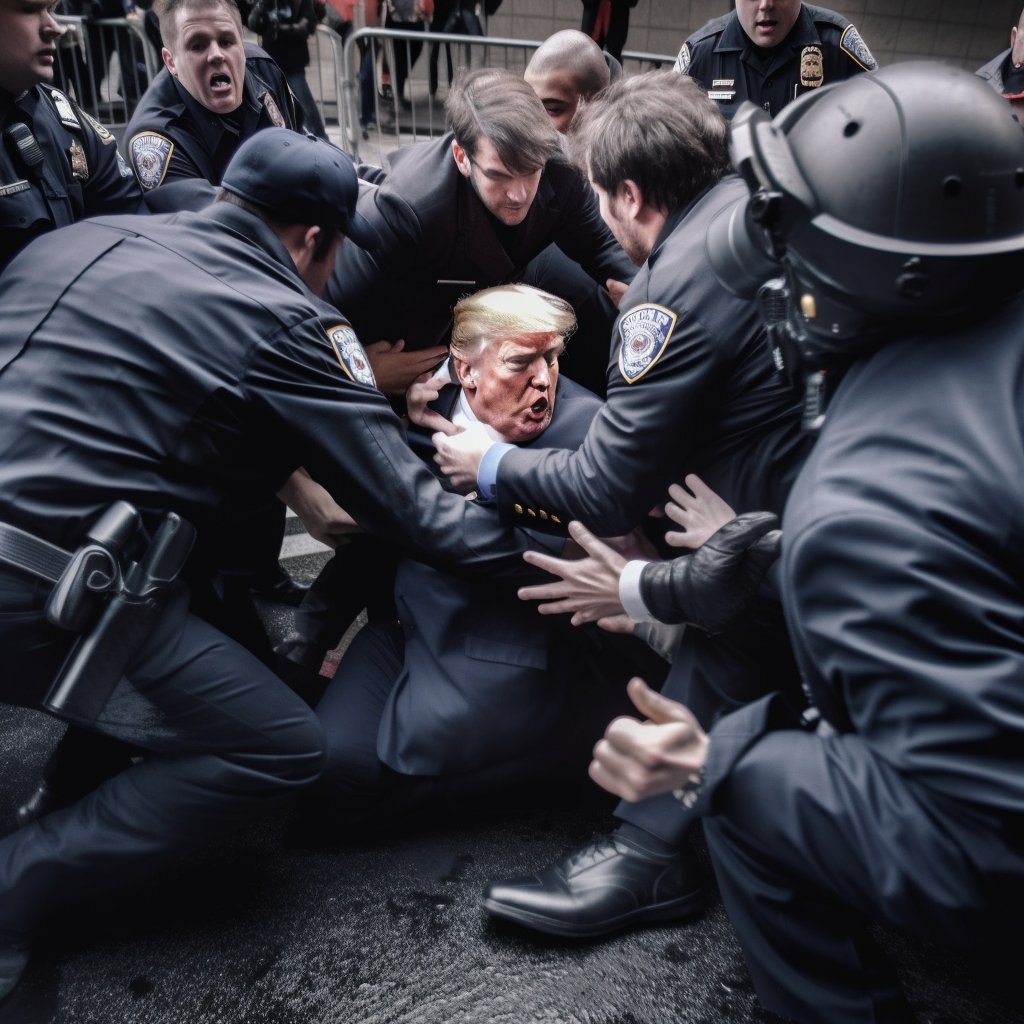
Fig. 1. "Fake Photo of Trump Being Arrested" (@EliotHiggins).
If you use images created by someone else using an AI tool, you can just cite the image as normal, though you may want to include a note stating that the image is generated by AI.
> Work Cited
>
> @EliotHiggins. Fake Photo of Trump Being Arrested. *Twitter*, 21 Mar. 2023, twitter.com/EliotHiggins/status/1637928223848767492. Accessed 28 Mar. 2023.
###